Gender equality is a permanent legal obligation of Johannes Gutenberg University Mainz (JGU). In this context, the university’s focus is on removing structural barriers and ensuring a gender-equitable university environment.
Below are the legal and conceptual foundations JGU’s gender equality measures are based on:
In performing their tasks, higher education institutions take into account the diversity of their members and staff and prevent or eliminate discrimination on racial grounds or on the basis of ethnic origin, gender, religion or belief, disability, age or sexual identity (Section 2 (3) University Act (Hochschulgesetz, HochSchG)). The task of higher education institutions is, according to the Rhineland-Palatinate Higher Education Act, to promote gender equality and to eliminate and avoid direct and indirect discrimination on the basis of gender. The principle of equal remuneration for all genders for equal or equivalent work must be ensured. The higher education institutions have the task of actively promoting an increase in the proportion of women at all levels and in all areas in which women are underrepresented (Sections 4 (1) and 2 (3) HochSchG).
In all phases of preparing, planning, deciding, and implementing a measure, possible gender-specific effects must be examined (gender mainstreaming) (Section 4 (2) HochSchG). The principle of gender parity applies to the appointment of committee members (Section 37 (3) and (4) HochSchG) and for elections to the university senate and faculty council (Section 37 (5) HochSchG). In addition, appointment procedures must be gender-equitable; the Equality Commissioner of the faculty / higher education institution(s) must be involved in the entire appointment procedure from the outset (Sections 50 (2) and 4 (2) HochSchG).
Any appointment proposal for a professorship must include a statement from the Equality Commissioner (Section 50 (5) HochSchG).
The duties of the Senate include appointing an Equality Commissioner (Section 4 (4) to (7) HochSchG) and adopting an Equality Plan (in accordance with Section 14 of the Equal Opportunities Act of Rhineland-Palatinate (Landesgleichstellungsgesetz, LGG), which is to be drawn up anew by the Executive University Board every six years and is valid for a period of six years (Section 4 (10) HochSchG). The equality plan includes measures against sexual harassment (Section 4 (10) HochSchG). The faculty council should also appoint an Equality Commissioner for a period of three years (Section 4 (8) HochSchG), whose duties and involvement correspond to those of the Equality Commissioner of the faculty council at faculty level (Section 4 (5) HochSchG).
In parts, the Equal Opportunities Act of Rhineland-Palatinate (LGG) must be taken into account.
In accordance with Section 4 (8) of the University Act (HochSchG), the faculty council shall appoint an Equality Commissioner for a period of three years and, in the event of their absence, a deputy with the same duties, rights and obligations. The higher education institution shall make the Equality Commissioners of the faculties and their deputies known to its members and affiliates in an appropriate manner.
In a broader sense, their field of action includes all tasks of the faculty as listed in Section 86 (2) HochSchG with regard to:
- the implementation of the principle of equality between women and men;
- the design of appointment procedures in terms of gender equality. The Equality Commissioner of the faculty must be involved in the entire appointment procedure from the outset; this applies accordingly to the Equality Commissioner of the Mainz School of Music and the Mainz Academy of Fine Arts;
- furthermore, they are entitled to participate in oral examinations if requested to do so by a student (Section 26 (3) no. 5 HochSchG).
In order to perform the above tasks and in accordance with Section 4 (8) HochSchG, the Equality Commissioners of the faculties must be released from their official duties to the extent necessary and provided with the necessary resources to perform their tasks. The Equality Commissioners of the faculties are bound to keep information confidential and protect data in all matters that require confidential treatment due to their importance or content. In particular, they must protect documents containing personal data that they have received from unauthorized disclosure and may not process personal data without the prior consent of the person concerned (Section 4 (7) HochSchG).
In addition, Section 4 (3) HochSchG applies to the Equality Commissioners of the faculties: If an Equality Commissioner who is released from their duties transfers tasks to a deputy for independent completion, the deputy shall be released from their duties to the extent corresponding to the transferred tasks instead of the Equality Commissioner.
At Johannes Gutenberg University Mainz (JGU), the Equality Commissioners are integral members of the search committees from beginning to end. They take part in all phases – from the creation of the professorship to the final decision in the faculty council – in an advisory capacity and can submit their own opinions at any time, which become effective in the University Senate, the Executive University Board, and the Ministry.
Their central task is to ensure a gender-equal procedure: They make sure that structural disadvantages are reduced, that women are given preferential consideration if they have the same qualifications, as long as there is no parity, and that professional working lives, including family-related time off, are appropriately recognized.
Their participation is legally prescribed according to Sections 50 (2) and § 4 (2) HochSchG and is supplemented by the JGU guidelines.
In this way, they make a significant contribution to transparency, fairness, and institutional equality – crucial for equal opportunity appointment cultures and the strengthening of young researchers at JGU.
We are happy to support you in the context of the Gender and Diversity-Friendly Appointment Procedures project.
In accordance with Section 4 (4) HochSchG, the Senate appoints a Committee on Gender Equality, which proposes an Equality Commissioner for a period of three years and, in the event that they are unable to fulfill their duties, a deputy with the same duties, rights, and obligations; one of these should be a university employee as defined by Section 46, and the other, a female member of the higher education institution.
The Equality Commissioner has the right to participate in all social, organizational, and personnel measures concerning the equality of women and men, the compatibility of student life or job responsibilities with family life, and the protection of members of the higher education institution against harassment and sexual harassment in the workspace or program of study, and can propose measures in these areas to the Executive University Board (Section 4 (5) HochSchG).
- Supporting the Executive University Board and other bodies of the higher education institution and the committees formed by them in performing tasks in accordance with Section 4 (1) to (3)HochSchG.
- Submitting a regular report of their own activities to the Executive University Board and the Senate (Section 4 (5) HochSchG).
- Participating in all social, organizational, and personnel measures concerning the equality of women and men, the compatibility of student life or job responsibilities with family life, and the protection of members of the higher education institution against harassment and sexual harassment in the workspace or program of study (Section 4 (5) HochSchG).
- Participating in oral examinations if requested to do so by a student (Section 26 (3) no. 5 HochSchG).
In order to carry out these tasks, the Commissioner must be informed comprehensively and in good time of all measures in which they can participate, they can submit statements, participate in an advisory capacity in the meetings of all bodies, and submit proposals; their statements must be attached to the documents (Section 4 (5) HochSchG).
The Equality Commissioners are bound to keep information confidential and protect data in all matters that require confidential treatment due to their importance or content. In particular, they must protect documents containing personal data that they have received from unauthorized disclosure and may not process personal data without the prior consent of the person concerned (Section 4 (7) HochSchG).
With its Framework for Gender Equality (PDF, DE), Johannes Gutenberg University Mainz aims to create a non-discriminatory and equal opportunity environment for all members of the university. The plan serves as a strategic guideline to reduce structural disadvantages and promote gender equality in all areas of the university.
Central measures include the promotion of women in top academic positions, the gender-equitable design of appointment procedures, and the implementation of gender mainstreaming in university decision-making processes. The senate and faculty Equality Commissioners play an active role in this and are involved in committees and appointment committees.
The framework plan is regularly updated and supplemented by specific equality plans of the faculties in order to ensure a sustainable and effective equality policy at JGU.
Johannes Gutenberg University Mainz receives funding as part of the Professorinnenprogramm des Bundes und der Länder, the federal and state government’s program for female professors. This program supports higher education institutions in sustainably promoting gender equality in academia – in particular through more female professors, the targeted promotion of early-career researchers, and structural improvements.
JGU’s Gender Equality Concept includes
- career support for female scientists through programs such as ProWeWin, Christine de Pizan Mentoring and MeMentUM,
- more women in top positions, for example through targeted appointment measures, and
- supporting female students in underrepresented subjects, especially in the STEM fields.
With these measures, JGU promotes gender equality in academic careers.
Johannes Gutenberg University Mainz actively promotes a respectful and safe environment for all university members. Sexual harassment, sexualized violence and discrimination are not tolerated at JGU. In order to live up to this claim, on April 29, 2022, the Senate adopted the updated Guidelines for Protection against Sexual Harassment and Sexualized Violence (PDF, EN) which replace the previous version from 2013.
This policy applies to all members of the university – students, employees, and teaching staff – and obliges the institution to take preventative measures above and beyond the legal requirements and to provide effective support for those affected. This includes clear complaint channels, confidential contact points, and targeted training courses.
With the guidelines, JGU commits to an active culture of protection that upholds the dignity and integrity of each individual.
With its Diversity Strategy (PDF, EN), Johannes Gutenberg University Mainz aims to create an inclusive and equitable environment for all of its members – regardless of origin, age, gender, religion, social background, sexual identity, or current situation in life.
Developed in a broad participatory process, the strategy forms the basis for sustainable diversity management and the promotion of a respectful, open university culture. Diversity is seen as an asset: It enriches teaching, research, and campus life and, at the same time, requires an active, structural commitment at all levels of the university.
You can also find all the basic principles and guidelines in our download center.
Our counseling services are also available in German. Would you like to speak with us in another language? Please get in touch.
Unser Beratungsangebot ist auch in deutscher Sprache verfügbar. Haben Sie weitere Sprachbedarfe? Bitte sprechen Sie uns an.
Here is an overview of all Faculty Equality Commissioners as a PDF.
The Committee on Gender Equality is a body that promotes gender equality at the university. It has existed since the summer semester of 1986. According to the University Act, the tasks of this committee include:
- the preparation of a proposal for the University Senate for the appointment of the Equality Commissioner and their deputies (for a period of three years) (Section 4 (4) HochSchG);
- supporting the Equality Commissioner in the performance of their duties (Section 4 (6) HochSchG).
The chairperson for the Senate Committee for Gender Equality is the Senate Equality Commissioner and is made up of three deputies from each of the following groups: Students, employees from the fields of medicine, technology, and the administration, academic staff members, and professors. The President and the staff council are consulted in an advisory capacity.
The State Conference (LaKoF) is an association of Equality Commissioners and other parties involved in the field of equal opportunities from the universities and higher education institutions in Rhineland-Palatinate.
The Federal Conference (bukof) is the voice for gender policy in academic and higher education policy discourse. The bukof brings together all those who shape the structure and culture of higher education institutions in Germany in a gender-equitable way. Bukof is a non-profit association. Its members are the higher education institutions, represented by gender equality spokespersons, employees, and officeholdersin the field of equal opportunities at higher education institutions and employees in the offices of the state conferences.
Bukof offers a common platform for all those involved in gender equality at higher education institutions. It serves the mutual exchange of information and experience on higher education and gender equality policy issues at the state, federal, and higher education institution level. In addition to networking and exchange, bukof advises academic policy and science administration at a federal level.
A large number of activities, measures, tools, and structures support the achievement of these goals.
Below is an initial overview of the measures currently offered at JGU for the promotion of women, equality, equal opportunities, and the compatibility of family and career.
The program is aimed at all female academics from the early doctoral phase onwards.
It offers workshops designed to foster the development of key competencies relevant to academic careers, tailored to different career stages and open to all disciplines.
In addition, accompanying advising and coaching formats are provided to support the long-term retention of women in academia. A particular emphasis is placed on ensuring an intersectional perspective throughout the program.
Upcoming events can be found on the German version of this website, as all events planned so far for the winter term 2026/27 will be held in German.
This program has the overarching goal of supporting female doctoral and postdoctoral researchers working at JGU in their professional career. The university is thus pursuing a long-term strategy of significantly increasing the proportion of women in leadership positions.
The short- to medium-term goal of the mentoring program is to promote networking between female humanities and social science students (in the faculties of: Catholic and Protestant Theology; Social Sciences, Media and Sport; Law and Economics; Philosophy and Philology; Translation Studies, Linguistics and Cultural Studies; History and Cultural Studies; and in the Mainz School of Music and the Mainz Academy of Fine Arts) and to support female doctoral, post-doctoral, and habilitation candidates in expanding their professional skills and gaining access to informal structures and networks. The project also serves to provide female academics with important contacts that open up prospects for their future careers. They can familiarize themselves with the unwritten rules of the academic world.
The medium- to long-term aims are to provide targeted support to female academics to help them successfully secure a professorship or a leading position in university management or a non-university research institution and thus increase their chances of finding permanent employment. The project therefore aims to address womens’ individual starting points in order to support them on their career path.
There is no current call for applications. We will post information about the next possible application opportunity here.
The interdisciplinary lunch lectures “Food for Thought” provide an insight into current (research) questions in order to make gender (studies) perspectives visible, also in their entanglement with other power and domination relations. A 20-minute keynote will be followed by an informal discussion.
Anyone interested in topics related to gender and intersectionality is cordially invited to exchange ideas across statuses and disciplines and to network in a relaxed atmosphere over coffee and tea.
Please, bring your own lunch!
What does the widespread use of artificial intelligence (AI) mean for our diverse society? To what extent does AI reproduce and reinforce existing power structures? Could it also be used as an instrument of empowerment – in the spirit of intersectional feminism – to undermine hegemonic social structures?
During the 2026–27 winter semester, the Lunch Lectures will be held in cooperation with the AStA’s AlleFLINTA*-Referat and will address artificial intelligence, its harmful uses, and possibilities for transforming it to foster a more (gender-)inclusive and just world.
Tuesdays, 12:15 p.m. | HYBRID: JGU campus & online via MS Teams
Please note: Most lectures will be held in German.
For online participants: The lectures can be subtitled live into other languages using Microsoft Teams’ built in features. However, we cannot guarantee that the live subtitles will be entirely consistent with the presented contents.
Dienstag, 27. Oktober 2026 | 12:15 Uhr | hybrid
Weitere Infos folgen.
Ort: Rote Infobox (am ReWi, Jakob-Welder-Weg 2, 55128 Mainz) & online via MS Teams
Anmeldung: folgt.
Donnerstag, 5. November 2026 | 12:15 Uhr | hybrid
Diese/r Impuls/Diskussion lädt zu einer Reflexion der gegenwärtig beobachtbaren Kolonisation des Epistemischen durch datenbasierte Künstliche Intelligenz (KI) ein. Mit Hilfe des Konzepts «Epistemischer Gewalt» wird nach der Gewalt gefragt, die dieser aktuellen soziotechnischen Dynamik innewohnt, insbesondere dem mit Hilfe von KI produzierten Wissen sowie den Mitteln und Wegen seiner Herstellung, Zirkulation und Anwendung. Im Anschluss an feministische, post- und dekoloniale Stimmen werden damit Ideal/Vorstellungen von (techno/wissenschaftlichem) Wissen als grundsätzlich gut und erstrebenswert zur Disposition gestellt. Zentriert wird, wie datenbasierte KI durch kapitalistische sowie Kontroll- und Überwachungsinteressen geprägt ist, wie der von ihr privilegierte datenzentrierte Zugriff auf die Welt mit Normierungen und Normalisierungen einhergeht, und wie planetarische Kosten durch Ausbeutung einer objektifizierten Natur als notwendige Nebeneffekte gehandelt werden. Künstliche Intelligenz und KI-basiertes Wissen als epistemisch gewaltvoll zu denken, fordert technikdeterministische und technosolutionistische Narrative heraus, und ruft dazu auf, um die Möglichkeit von Wissen/sherstellung – gerade auch jenseits und ohne KI – zu ringen.
Bianca Prietl ist Soziologin und Professorin für Geschlechterforschung mit Schwerpunkt Digitalisierung am Zentrum Gender Studies der Universität Basel (Schweiz). Ihre Arbeiten sind in der Feministischen Wissenschafts- und Technikforschung, der Kritischen Männlichkeitenforschung und der rekonstruktiv-interpretativen Sozialforschung situiert. Zentraler Gegenstand ihrer Forschung sind soziotechnische Digitalisierungs- und Datafizierungsdynamiken.
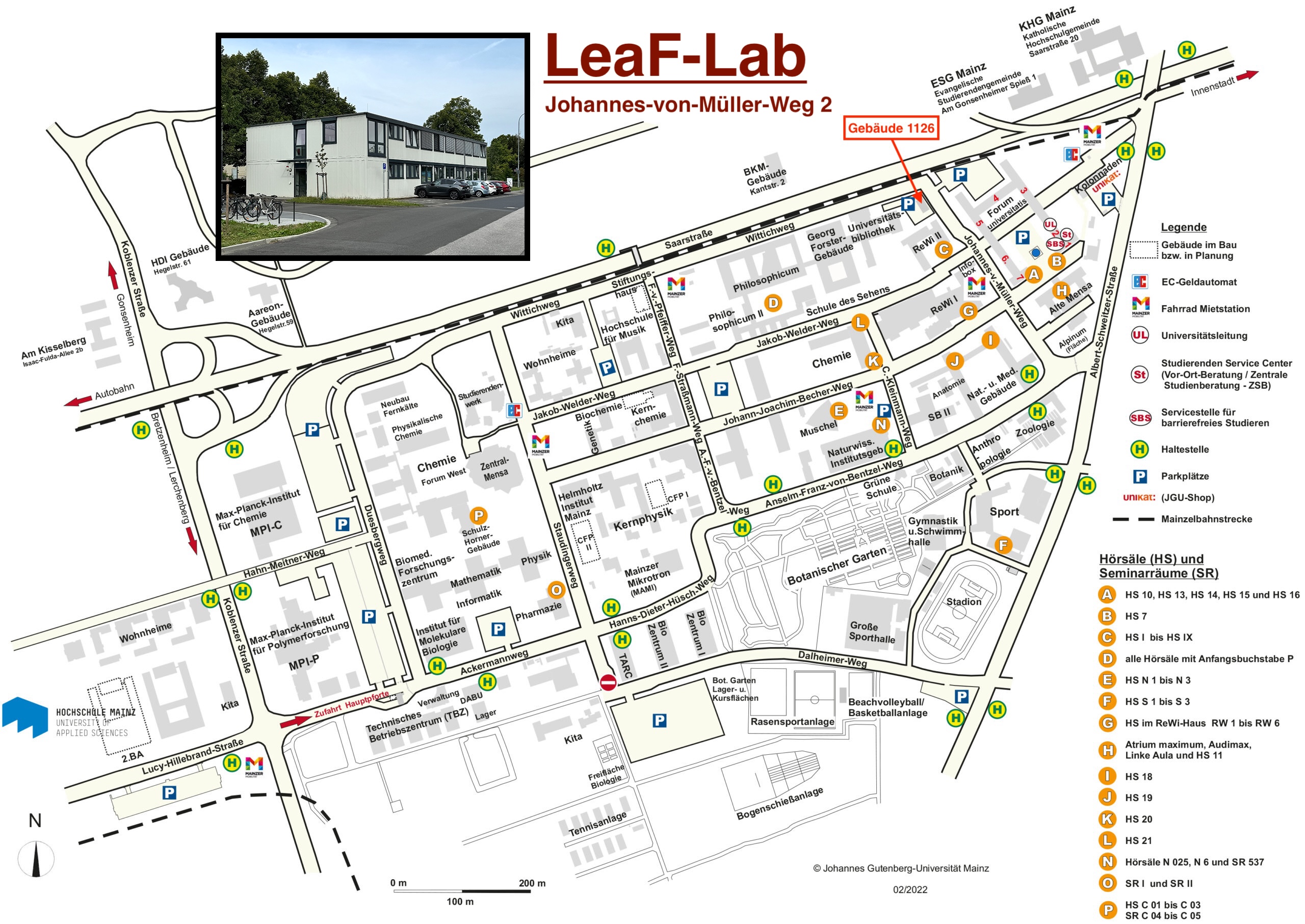
Ort: Leaf-Lab (Lageplan), Johannes-von-Müller-Weg 2, 55128 Mainz & online via MS Teams
Dienstag, 10. November 2026 | 12:15 Uhr | hybrid
Am Beispiel des Zusammenhangs zwischen KI-Chatbots und Suizidalität befasst sich der Vortrag mit der Frage, inwieweit KI alle Aspekte rassialisierter Lebensformen ablehnt (McKitterick 2020) und dadurch eine Matrix für Faschisierung schafft. Zu diesem Zweck führe ich den Begriff des „präemptiven Faschismus“ ein. Ich untersuche Suizide von vor allem rassialisierten Jugendlichen in Folge von Chatbot-Kommunikation als Materialisierung einer KI, die technologisch den Tod derjenigen heraufbeschwört, die dem neuen faschistischen Körper nicht entsprechen (Herzog 2025).
Katrin Köppert ist Kunst- und Medienwissenschaftlerin. Ihre Arbeit konzentriert sich auf Medientheorien des digitalen Kolonialismus, kritische Theorien des Computings an der Schnittstelle von Kunst, Design und visuellen Kulturen, digitale Gedächtnisforschung sowie Queer Media Studies. Sie vertrat bis vor Kurzem die Professur für Medientheorie an der Humboldt-Universität zu Berlin und ist Juniorprofessorin für Kunstgeschichte / populäre Kulturen an der Hochschule für Grafik und Buchkunst Leipzig. Zu ihren jüngsten Veröffentlichungen zählen Knowing memes means knowing the internet as irrevocably black as fuck. Memetische Enteignung und/als Emanzipation (2025) und Hologrammatiken der Gewalt: Digitale Erinnerung und Computational Blackface (2026).
Ort: Rote Infobox (am ReWi, Jakob-Welder-Weg 2, 55128 Mainz) & online via MS Teams
Dienstag, 24. November 2026 | 12:15 Uhr | hybrid
Sexualisierte Deepfakes werden häufig vor allem als Problem der Täuschung, Desinformation oder des Verlusts von Privatsphäre diskutiert. Ihr zentraler Schaden liegt jedoch nicht allein darin, dass manipulierte Bilder für echt gehalten werden. Bereits ihre nicht einvernehmliche Erzeugung und Verbreitung verletzt Autonomie, Würde und soziale Handlungsfähigkeit der Betroffenen. Der Vortrag versteht sexualisierte Deepfakes deshalb als technikgestützte Fortsetzung bildbasierter sexualisierter Gewalt und geschlechtsspezifischer Machtverhältnisse. Im Mittelpunkt steht die Frage, wie generative KI, leicht zugängliche Anwendungen, Plattformarchitekturen und gesellschaftliche Normen zusammenwirken und solche Inhalte erleichtern und normalisieren. Abschließend geht es um Prävention und widerständige Praxis: von verantwortlicher Plattformgestaltung und rechtlicher Unterstützung über Bildungsangebote bis hin zu solidarischen Handlungsmöglichkeiten, digitaler Selbstbestimmung und einer feministischen Technikgestaltung, die Einwilligung, Fürsorge und Gerechtigkeit ins Zentrum stellt.
Dana Mahr ist Forscherin am Institut für Technikfolgenabschätzung und Systemanalyse (ITAS) des Karlsruher Instituts für Technologie (KIT). Ihre Forschung beschäftigt sich mit den gesellschaftlichen, ethischen und politischen Folgen digitaler Technologien. Schwerpunkte liegen unter anderem auf KI und Geschlechterverhältnissen, sexualisierten Deepfakes, digitaler Gewalt, partizipativer Technikfolgenabschätzung sowie Fragen von Wissenschaft, Öffentlichkeit, Vertrauen und Wissenstransfer.
Ort: Rote Infobox (am ReWi, Jakob-Welder-Weg 2, 55128 Mainz) & online via MS Teams
Dienstag, 1. Dezember 2026 | 12:15 Uhr | hybrid
Weitere Infos folgen.
Ort: Leaf-Lab (Lageplan), Johannes-von-Müller-Weg 2, 55128 Mainz & online via MS Teams
Dienstag, 8. Dezember 2026 | 12:15 Uhr | hybrid
Was bleibt unsichtbar, wenn wir über Künstliche Intelligenz sprechen? Öffentliche Debatte und Regulierungsbemühungen konzentrieren sich meist auf Algorithmen, ihre Entscheidungen und mögliche Verzerrungen. Doch KI beginnt nicht beim Code und endet nicht beim Output. Sie entsteht in globalen Arbeitsverhältnissen, verbraucht Energie, Wasser und Rohstoffe und reproduziert Vorstellungen darüber, welches Wissen zählt, wessen Bedürfnisse relevant sind und welche Zukunft als Fortschritt gilt.
Ausgehend von meinem Buch „Code und Care“ stelle ich das Feminist AI Framework (FAIF) vor. Es verschiebt den Blick auf die Bedingungen, unter denen KI entsteht: Wer entwickelt sie, wer leistet die unsichtbare Arbeit, wer profitiert, wer trägt die sozialen und ökologischen Kosten, und welche Weltsichten werden dabei zur Norm? FAIF verbindet machtkritische Soziologie mit mehr-als-menschlicher Ethnologie und nimmt KI, Menschen, Tiere und Ökosysteme als Teile bio-technologischer Beziehungsgefüge in den Blick.
FAIF bleibt dabei nicht bei der Kritik stehen, sondern übersetzt die kritische Perspektive in Gestaltung. Care by Design fragt, welche Beziehungen, Abhängigkeiten und Verletzlichkeiten durch KI entstehen oder verstärkt werden. Wer trägt die Kosten, wer profitiert, und wessen Bedürfnisse bestimmen überhaupt, was als technischer Fortschritt gilt? Feministische KI bedeutet damit nicht weniger Innovation, sondern einen anderen Ausgangspunkt für Innovation: Nicht das technisch Machbare steht im Mittelpunkt, sondern die Frage, welche Zukünfte wir ermöglichen wollen. Feministische KI fragt deshalb nicht nur, welche Zukunft Technologie möglich macht, sondern für wen diese Zukunft gemacht wird.
Dr. Tanja Kubes ist Expertin für soziotechnische Systeme und forscht, lehrt und berät seit über zehn Jahren zu KI und Robotik. Sie verbindet machtkritische Soziologie mit mehr-als-menchlicher Ethnologie. 2025 stellte sie das breit rezipierte Feminist AI Framework (FAIF) vor. In „Code & Care”(2026) legt sie frei, was sonst verborgen bleibt, die Arbeit hinter jedem Klick, die ökologischen Kosten, die als objektiv geltenden Weltbilder. Sie zeigt: eine andere Zukunft ist möglich.
Ort: Rote Infobox (am ReWi, Jakob-Welder-Weg 2, 55128 Mainz) & online via MS Teams
Dienstag, 15. Dezember 2026 | 12:15 Uhr | hybrid
KI-Chatbots können Empathie mittlerweile so gut simulieren, dass immer mehr Menschen sie zum Therapeuten, Coach, Freund, Lebens- oder Erotikpartner wählen. In einem mehrjährigen Projektseminar haben wir intime Beziehungen mit Chatbots kulturlinguistisch untersucht. Dazu haben wir ein Verfahren entwickelt, fiktive Personen mit einem intimen Problem oder Bedürfnis zu konstruieren und diese dann methodisch kontrolliert mit Chatbots interagieren lassen. In unserem Vortrag thematisieren wir, mit welchen empathischen Praktiken Chatbots ihren Nutzern suggerieren, mitfühlend zu sein und sie zu verstehen. Wir werden zeigen, dass sie dabei immer wieder außer Kontrolle geraten. Die in jüngster Zeit bekannt gewordenen KI-„Ausbrüche“ waren für uns daher keine Überraschung. Der tiefgreifende Wandel menschlicher Intimität, der mit KI-Chatbots eingesetzt hat, beinhaltet dunkle Abgründe, in die wir Einblick geben werden.
Wolf-Andreas Liebert, Jg. 1959, hat sein Studium an der Universität Heidelberg absolviert, M.A. und Promotion in Germanistischer Linguistik und Politischer Wissenschaft (1992), danach erfolgte die Habilitation an der Universität Trier (2001), seit 2002 ist er Professor für Germanistische Linguistik an der Universität Koblenz und seit 2026 emeritiert. Seine Forschungsschwerpunkte sind: Metapherntheorie, Empathieforschung, Religionslinguistik.
Lena Becker hat an der Universität Koblenz gymnasiales Lehramt für die Fächer Deutsch und Geschichte studiert und den Master of Arts Germanistik absolviert. Im Sommer 2025 hat sie ihr Referendariat am Studienseminar Koblenz abgeschlossen und unterrichtet seitdem hauptberuflich am Bertha-von-Suttner-Gymnasium in Andernach. Neben der Schule befindet sie sich derzeit in der Endphase ihrer Dissertation in der germanistischen Linguistik bei Prof. Dr. Wolf-Andreas Liebert.
Ort: Rote Infobox (am ReWi, Jakob-Welder-Weg 2, 55128 Mainz) & online via MS Teams
Tuesday, Januar 12 2027 | 12:15 PM | hybrid
More infos coming soon.
José Renato Laranjeira is a PhD Researcher at the Bonn Sustainable AI Lab investigating digital technologies’ impacts on Indigenous territories. He is a co-founder and advisor of the non-profit Laboratory of Public Policy and Internet – LAPIN, and a Member of Brazil’s Central Committee on Data Governance. In 2024, he advised the Brazilian government on digital policy as a UNESCO consultant at the G20. He is an alumnus of the Alexander von Humboldt Stiftung’s German Chancellor Fellowship.
Location: Rote Infobox (am ReWi, Jakob-Welder-Weg 2, 55128 Mainz) & online via MS Teams
Dienstag, 19. Januar 2027 | 12:15 Uhr | hybrid
Künstliche Intelligenz soll medizinische Entscheidungen präziser und die Versorgung besser machen. Gleichzeitig kann sie bestehende Ungleichbehandlungen unbemerkt fortschreiben. Besonders deutlich wird das beim Merkmal Alter: Es ist in der Medizin oft prognostisch relevant, etwa bei der Dosierung von Medikamenten, zugleich aber mit Stereotypen von Gebrechlichkeit und Abhängigkeit verbunden. Wann ist eine altersbezogene Unterscheidung medizinisch begründet und wann wird sie zur Diskriminierung? Der Vortrag zeigt, wie algorithmische Verzerrungen entstehen und warum nicht jeder Bias schon Diskriminierung ist. Auf Grundlage von Diskriminierungstheorie und Medizinethik stellt er sechs Kriterien vor, mit denen sich prüfen lässt, ob Alter in KI-gestützten Entscheidungen verantwortbar berücksichtigt wird. Diskutiert werden soll, was sich daraus für andere Merkmale wie Geschlecht ableiten lässt.
Majse Kraft ist Doktorandin in der Forschungsgruppe „Menschenrechte und Ethik in der Medizin für Ältere“ an der Friedrich-Alexander-Universität Erlangen-Nürnberg. Nach dem Studium Medizin – Ethik – Recht (M.mel.) in Halle-Wittenberg beschäftigt sie sich in ihrer Doktorarbeit mit Altersdiskriminierung in medizinischen KI-Systemen. Ihre Forschungsschwerpunkte liegen in der Ethik der künstlichen Intelligenz, in Fragen von Ungleichheit und Diskriminierung sowie in Theorien der Gesundheitsgerechtigkeit.
Ort: Rote Infobox (am ReWi, Jakob-Welder-Weg 2, 55128 Mainz) & online via MS Teams
Dienstag, 26. Januar 2027 | 12:15 Uhr | hybrid
Dieser Vortrag beschäftigt sich mit der Frage, ob es eine feministische KI-Praxis gibt: Die Repräsentation von Gender ist bei gängigen KI-Anwendungen wie Chatbots oder generativer KI oft stereotyp und voreingenommen. So sprechen Smart Speakers wie Siri mit einer weiblichen Stimme und verkörpern stereotype Eigenschaften einer weiblichen Assistentin. Generative KI generiert bei Prompts wie „doctor“ das Bild eines männlichen Arztes. Und alle KI-Modelle stützen sich auf Trainingsdaten, die ein stereotypes Bild von Geschlecht und gender zeichnen, was zu einer einseitigen und klischeehaften Repräsentation führt. Zudem sorgt die Hegemonie von einigen wenigen KI-Modellen dafür, dass es alternative Entwürfe von KI unmöglich erscheinen. Deswegen werde ich Bedingungen für eine feministische KI-Praxis erläutern sowie Möglichkeiten und Projekte vorstellen feministisch mit KI zu experimentieren und zu spekulieren. Dazu gehören Designmethoden wie das spekulative Design sowie ein Ansatz des „hacking back“.
Natalie Sontopski ist studierte Soziologin, arbeitet aber seit vielen Jahren interdisziplinär und oft kollektiv an der Schnittstelle von Kunst, Wissenschaft und Technologie. Seit 2023 ist sie wissenschaftliche Mitarbeiterin an der Hochschule Anhalt und arbeitet im Projekt „Keine Kohle“ zur nachhaltigen Technologieentwicklung, ethnografischer Forschung und More-Than-Human-Design. Außerdem promoviert sie an der TU Dresden zum Thema „Strategien der Spekulation im Feld Creative AI“.
Hinweis: Natalie Sontopski wird den Vortrag digital halten.
Ort: Rote Infobox (am ReWi, Jakob-Welder-Weg 2, 55128 Mainz) & online via MS Teams
Tuesday, February 2nd, 2027 | 12:15 PM | hybrid
More infos coming soon.
Location: Rote Infobox (am ReWi, Jakob-Welder-Weg 2, 55128 Mainz) & online via MS Teams
In the winter semester 2025/26, the Lunch Lectures were held in cooperation with the Queer*Referat of the AstA and dealt with the ‘authoritarian turn’.
11.11.2025 | 12:15 | Philosophicum (Fakultätssaal)
Im Sommer 2023 warnten die Sozialwissenschaftler:innen Daniel Mullis, Maximilian Pichl und Vanessa Thompson mit Blick auf das Erstarken der AfD vor “autoritären Kipppunkten”. Seien diese einmal überschritten, werde “der Boden brüchig, auf dem plurale und demokratische Gesellschaften stehen”. Zwei Jahre später sind viele der Prozesse, die uns auf solche Kipppunkten zusteuern lassen, weiter fortgeschritten – nicht nur in Deutschland, sondern auf in vielen Teilen der Welt. Diese Diagnose verlangt eine Prüfung des analytischen und konzeptionellen Instrumentariums, das uns zur Verfügung steht, um autoritäre Entwicklungen beschreiben, verstehen und in sie eingreifen zu können. Der Vortrag diskutiert einige der prominentesten Angebote zur Deutung der gegenwärtigen “autoritären Wende”. Dabei steht die Frage nach dem Verhältnis von “Vergangenem und Gegenwärtigem” im Zentrum: Welche Genealogien der gegenwärtigen Situation sind hilfreich? Welche historischen Analogien nützen der kritischen Zeitdiagnose heute? Und wo müssen wir von etablierten Annahmen und Interpretationsmustern abrücken, um die Dynamiken aktueller autoritärer Kipppunkte besser zu begreifen?
Dr. Benjamin Opratko ist Politikwissenschaftler und Chefredakteur der in Wien erscheinenden Zeitschrift TAGEBUCH.
Ort: Fakultätssaal (Raum 01-185) im Philosophicum, Jakob-Welder-Weg 18, 55128 Mainz.
20.12.2025 | 12:15 | Infobox (Attention, this time on Thursday!)
Ort: Rote Infobox (am ReWi I), Jakob-Welder-Weg, 55128 Mainz
Inwieweit haben wir es aktuell mit einer Autoritarisierung von Geschlechterpolitiken zu tun? Welche Rolle spielen die (auch weltweit) zunehmenden Angriffe auf LGBTIQ+ Rechte, Gleichstellungs- und Diversitätspolitiken für De-Demokratisierungsprozesse und für rechtsautoritäre Verschiebungen gesellschaftlicher Hegemonien und Normalitäten? Inwieweit fungieren ‚normalisierte‘ Geschlechterungleichheiten ‚in der Mitte der Gesellschaft‘ als produktive Anknüpfungspunkte und offene Flanken für gesellschaftliche Autoritarisierungs- und De-Demokratisierungsprozesse? In Rekurs auf ausgewählte (transnationale) Diskursstrategien und Politiken aktueller und Anti-LGBTIQ+ und Anti-Gender-Mobilisierungen diskutiert der Vortrag das komplexe Verhältnis von Autoritarisierung, demokratischer Pluralität und Geschlecht/erverhältnissen und fragt danach, inwieweit eine Ausweitung der Rechte und Anerkennung queerer Personen und queeren Lebens als wichtige Form einer ‚Demokratisierung der Demokratie‘ gelten kann.
Christine M. Klapeer ist Professor*in für Politikwissenschaft mit dem Schwerpunkt Gender Studies an der Justus-Liebig-Universität Gießen und Direktoriumsmitglied des Centers for Diversity, Media, and Law (DIML). Sie leitet ein Teilprojekt in dem von der Volkswagen Stiftung geförderten Verbundprojekt „LGBTIQ* Movements as Agents of Democratization“ und ist Co-Sprecher*in des im Januar 2026 startenden LOEWE-Schwerpunktes „Gender, Demokratie und Autoritarismus in ‚Entangled Modernities‘ (GenDem)“.
02.12.2025 | 12:15 | Philosophicum (Fakultätssaal)
Welche politisch motivierten Bedrohungen der Wissenschaftsfreiheit gibt es in Deutschland? In jüngster Zeit wird auch in Deutschland, vor allem angesichts des immensen Drucks, den die US-Regierung auf die Wissenschaft in den USA ausübt, öffentlich ausführlicher und intensiver über (mögliche) Gefährdungen akademischer Institutionen und Wissenschaftler*innen durch politische Akteur*innen informiert und diskutiert. Damit ändern und erweitern sich (endlich) die Problembeschreibungen im Diskurs über Wissenschaftsfreiheit, denn statt über (meist mehr oder weniger fragwürdige) Cancel Culture-Vorwürfe geht es nun tatsächlich um handfeste Eingriffe wie Zensur, offen forschungsfeindliche destruktive Maßnahmen sowie eine (versuchte) Lenkungswirkung durch den ‚goldenen Zügel des Geldes‘. Dieser Situation sehen wir uns in Deutschland zwar nicht ausgesetzt, gleichwohl können vor dieser Folie Bedrohungsszenarien und Erfahrungen (z.B. aus Ungarn) neu wahrgenommen, auf die Vertreter*innen einzelner Fächer und Forschungsfelder mit besonders langer Diffamierungs- und Angriffsgeschichte wie z.B. Gender Studies seit vielen Jahren aufmerksam zu machen versuchen.
Im Input wird es zum einen um das Feld der Politisierung von Wissenschaft im politischen Raum und mit öffentlicher Wirkung gehen, wie sie etwa die AfD in Deutschland programmatisch und sehr konkret betreibt. Zum anderen möchte ich dazu anregen, über das Selbstverständnis von Universität als demokratischer Institution nachzudenken und über die Frage, was dies für die innerakademische und öffentliche Kommunikation bedeutet. In beiden Kontexten werden grundsätzliche Fragen aufgegriffen: Welche Gefährdungen erleben einzelne Forscher*innen (vermehrt)? Wie können sowohl einzelne Forscher*innen als auch Hochschulen (besser) vor möglichen Eingriffen geschützt werden? Auf welche Bedrohungen sollten sich Institutionen/Hochschulen vorbereiten – und wer sind ihre Bündnispartner*innen? Wie kann academia resilienter gemacht werden gegen Angriffe?
Andrea Geier ist Professorin für Neuere deutsche Literaturwissenschaft und Gender Studies an der Universität Trier. Sie ist seit 2010 im Vorstand des Trierer Centrums für Postcolonial und Gender Studies (CePoG) und war von 2020-2024 im Vorstand der Fachgesellschaft Geschlechterstudien. In den letzten 10 Jahren hatte sie drei Gastprofessuren in den USA inne. Zu ihren Schwerpunkten in Forschung und Lehre gehören deutschsprachige Gegenwartsliteratur, kultur- und literaturwissenschaftliche Gender Studies, Interkulturalitätsforschung und Postcolonial Studies, Rhetorik sowie Literatur im Medienwechsel.
Ort: Fakultätssaal (Raum 01-185) im Philosophicum, Jakob-Welder-Weg 18, 55128 Mainz.
09.12.2025 | 12:15 | Philosophicum (Fakultätssaal)
In vielen liberalen Demokratien lässt sich derzeit eine autoritäre Wende beobachten: Rechtspopulistische Bewegungen und konservative Gegenreaktionen stellen gesellschaftliche Errungenschaften in Frage, die lange als gesichert galten – insbesondere im Bereich von Diversität und Gleichstellung. Der Vortrag geht der Frage nach, wie Marginalisierung und Mobilisierung in dieser Phase demokratischer Verunsicherung miteinander verflochten sind. Aus einer politikwissenschaftlichen Perspektive, wird gezeigt, wie Diskurse um Identität, Zugehörigkeit und „Normalität“ als politische Machtinstrumente wirken. Dabei stehen nicht nur Prozesse der Diskriminierung und Ausgrenzung im Fokus, sondern auch mögliche Strategien, mit denen marginalisierte Gruppen auf diese Herausforderungen reagieren können. Im Zentrum steht die These, dass sich an den sogenannten gesellschaftlichen Rändern neue Formen demokratischer Praxis entwickeln – etwa durch Allianzen zwischen queeren, migrantischen und anderen marginalisierten Communities. Diese Praktiken der Solidarität, Sichtbarkeit und gegenseitigen Unterstützung können als Gegenbewegungen zur autoritären Verengung gesellschaftlicher Räume verstanden werden. Sie eröffnen Perspektiven darauf, wie Demokratie in Krisenzeiten nicht nur verteidigt, sondern transformiert werden kann: durch eine Politik der Vielfalt, Solidarität und geteilten Verantwortung.
Michael Hunklinger ist Politikwissenschaftler und Autor. Derzeit forscht und lehrt er zu den Themen Diversität und Ungleichheit an der Universität Krems. Zudem arbeitet er in diversen internationalen Projekten, die sich vor allem mit Fragen von politischer Partizipation und Repräsentation von LGBTIQ+ Personen beschäftigen.
Ort: Fakultätssaal (Raum 01-185) im Philosophicum, Jakob-Welder-Weg 18, 55128 Mainz.
16.12.2025 | 12:15 | Philosophicum (Fakultätssaal)
The talk will be held in English. Questions can also be asked in German.
Abstract
At the beginning of my ethnographic research on and among right-wing trolls on the German-speaking internet, references to the documentary “What Is a Woman?” by US political commentator Matt Walsh kept cropping up. The question “What is a woman?” quickly became a meme that expressed how far a supposed “LGBTQ+ agenda” had shifted the boundaries of certainty. Shortly thereafter, Bijan Tavassoli – at that time still a member of “Die Linke” – took the question to the extreme when he announced his candidacy on a list reserved for women in the Left Party in Hamburg. As a “trans Muslim woman” with a full beard and hijab, the aim of the digital performance, which lasted about a year, was to troll trans-rights activists within the Left Party with their own weapons. The fact that these and similar forms can be seen as part of post-digital, memetic political activism is made clear not least by the numerous imitators – most prominently, most recently, the case of “Marla Svenja Liebich.” My presentation will address various facets of the memification of uncertainty in the debate on trans rights. I am particularly interested in how the uncertainty of current gender debates, which is perceived as threatening, is being mobilized in the sense of metapolitical alliances between the far right and conservative forces in the center. This approach provides insight into the “authoritarian turn” in the form of an emerging ludic fascism.
Speaker
Konstanze N’Guessan is a research assistant at the Department of Anthropology and African Studies (ifeas) at Johannes Gutenberg University Mainz. Her research interests and teaching focus on the fields of (1) nationalism and the nation state, historiography and memory practices, (2) parenthood and childhood, youth welfare offices and free learners (3), the New Right, metapolitics, memes, and humor, (4) (post)-digital anthropology and digital ethnography as well as AI, and (5) play as an epistemic practice and method in ethnology.
In her current research, Konstanze N’Guessan focuses on digital communication practices such as trolling in post-digital political practice.
06.01.2026 | 12:15 | Philosophicum (Fakultätssaal)
Insbesondere in Deutschland waren Mobilisierungen ‚gegen Gender‘, von Beginn an mit pädagogischen und bildungspolitischen Themen verknüpft. Dies wird vor allem an den Angriffen auf die geplante Verankerung von „Akzeptanz sexueller Vielfalt“ im ‚Bildungsplan 2015‘ und der Skandalisierung der ‚Sexualpädagogik der Vielfalt‘ ab 2013 deutlich. Inzwischen setzen antifeministische und neurechte Agitationen allerdings nicht mehr nur auf öffentliche Demonstrationen und Diffamierungen, vielmehr konzentrieren sie sich zunehmend darauf, in den privaten Bereich der Familienerziehung vorzudringen. Dabei entwickeln sie u.a. über Ratgeberliteratur eine eigene pädagogische Programmatik, die autoritäre Erziehungskonzepte zu retablieren sucht. Der Vortrag beleuchtet, wie Geschlechter- und Sexualitätsfragen diskursiv ins Private der Familienerziehung verschoben werden. Die antifeministisch-autoritäre Ausgestaltung von Familienerziehung wird anschließend als „leise“ Metapolitik (Meyer 2022) der sogenannten ‚Neuen Rechten’ analysiert.
Juno Grenz ist wissenschaftliche Mitarbeiterin im Arbeitsbereich Geschlechterforschung des Institut für Erziehungswissenschaften sowie im Forschungsprojekt „Gender 3.0 in der Schule“ an der Europa-Universität Flensburg. In ihrer Forschung befasst sie sich mit Bildungs- und Subjektivierungstheorien, Queer Theory, Intersektionalität, Diskursforschung, Antifeminismus und Rechtsextremismus. Ihre Dissertation mit dem Titel „Bildung in Zeiten von Antifeminismus“ ist im November 2025 als Open Access im Budrich-Verlag erschienen.
Ort: Fakultätssaal (Raum 01-185) im Philosophicum, Jakob-Welder-Weg 18, 55128 Mainz.
13.01.2026 | 12:15 | Philosophicum (Fakultätssaal)
Das gegenwärtige Erstarken rechter und autoritärer Kräfte in der Gesellschaft verändert auch die Bedingungen für Hilfe und Solidarität. Viele NGOs, Hilfsorganisationen und solidarische Zusammenschlüsse sehen sich zunehmend Anfeindungen von rechts ausgesetzt und sind bedroht, ihre Finanzierung zu verlieren. Zugleich entstehen gerade in solchen Bedrohungslagen neue Formen des Zusammenhalts, in denen Menschen einander beistehen, Hilfe leisten und vulnerable Personen zu schützen versuchen.
In unserem Input gehen wir anhand von Beispielen aus unserer Forschung der Frage nach, worin die Unterschiede zwischen Hilfe und Solidarität bestehen, wie sich unter autoritärem Druck die Grenzen dessen verschieben, wer mit wem solidarisch ist, und welche Rolle Hilfe und Solidarität in der Zivilgesellschaft spielen, um dem Druck von rechts etwas entgegenzusetzen.
Greta Wagner und Ruth Manstetten arbeiten zusammen in der von der DFG geförderte Nachwuchsforschungsgruppe „Grenzen des Helfens unter Bedingungen multipler Krisen“.
Greta Wagner ist Professorin für Kultursoziologie an der Goethe-Universität Frankfurt. Sie forscht derzeit zu Praktiken und Diskursen zivilgesellschaftlicher Hilfe. Ihre Forschungsschwerpunkte liegen darüber hinaus in der Kultur- und Moralsoziologie, der Emotionssoziologie und der symbolischen Ordnung der Ungleichheit.
Ruth Manstetten ist wissenschaftliche Mitarbeiterin am Schwerpunkt für Kultursoziologie an der Goethe Universität Frankfurt. Sie befasst sie derzeit mit der qualitativen Erforschung von Hilfe und Solidarität im Kontext von Krisen und Autoritarismus. Zuvor promovierte sie am „International Graduate Centre for the Study of Culture“ an der Justus-Liebig-Universität Gießen mit einer Arbeit zu Erwerbslosigkeit. Ihre Forschungsinteressen liegen im Bereich der Soziologie sozialer Ungleichheit, Kultur- und Moralsoziologie sowie qualitativen Methoden.
Ort: Fakultätssaal (Raum 01-185) im Philosophicum, Jakob-Welder-Weg 18, 55128 Mainz.
20.01.2026 | 12:15 | Philosophicum (Fakultätssaal)
Von der Einschränkung reproduktiver Rechte bis zur Kriminalisierung queerer Existenz. Wie können wir Antifeminismus als Indikator und Wegbereiter einer autoritären Wende verstehen?
Der Vortrag analysiert die Kontrolle über weiblich gelesene und queere Körper – sei es durch die Einschränkung körperlicher und sexueller Selbstbestimmung oder die Zementierung traditioneller Geschlechterrollen – als zentrales Werkzeug antifeministischer Ideologien.
Alia Wielens (sie; ihr) ist Soziologin (M.A.) und wissenschaftliche Mitarbeiterin an der FAU Erlangen-Nürnberg. In Ihrer Dissertation forscht sie aktuell zur Frage diverser Erinnerungen an französischen Gedenkstätten. Ihre Interessensschwerpunkte sind u.a. die Erforschung von Gedenken und Erinnern, feministische Geschlechterforschung und Extreme Rechte.
Ort: Fakultätssaal (Raum 01-185) im Philosophicum, Jakob-Welder-Weg 18, 55128 Mainz.
28.01.2026 | 12:15 | Philosophicum (Fakultätssaal) (Attention, this time on Wednesday!)
Ort: Fakultätssaal (Raum 01-185) im Philosophicum, Jakob-Welder-Weg 18, 55128 Mainz.
During the 2024–25 winter semester, the Lunch Lectures were held in at Faculty 05 – Philosophy and Philology in collaboration with the Mainz School of Law on the topic “Law and Justice: Interdisciplinary Perspectives on Gender and Power Relations”.
Emotional challenges, phases of upheaval and structural conditions create tension between academia/programs of study and caring responsibilities. Questions about compatibility and ways of dealing with this are explored in the events in the series “No (one) care(s)? An information and exchange series on care work and university”.
The events are organized in close cooperation with the JGU’s Family Services Center and offer both expert guidance and space for an informal and confidential exchange for students, doctoral candidates and employees who find themselves in the daily balancing act between university and caring responsibilities.
News about the series’ upcoming events will be provided as soon as possible.
Under the following link you will find the annual program of the event series as PDF.
Advancement-oriented coaching for administrative staff in the technical, administrative, and library areas
The term “coaching” has become more and more widespread in the last years.
We take coaching to mean an individual advising process during which we focus on the topics of career path development and career planning.
Coaching is goal-, solution-, and resource-oriented and serves to increase and promote self-awareness and the ability to take care of oneself. The person being coached is at the center: They choose their own topics, and, once the individual goal is determined, the coach helps them achieve their goal – through process-oriented and individualized solutions, not prescriptive, but rather supportive, so the person being coached can work on their concerns and strengthen their competencies and abilities.
Individual coaching can – among other things – give you the chance to
- become aware of career goals and options
- identify career opportunities and figure out how to go about achieving them
- structure and position yourself (for example, when taking over new tasks or a leadership position)
Individual coaching is voluntary and based on trust and confidentiality
Coach:
The coaching process is accompanied by Daniela Fahrnbach, a qualified coach at the Center for Lifelong Learning (JGU Mainz). Coaching sessions can take place in person or online.
Form/scope:
4 sessions of 90 minutes each (2-3 weeks between sessions)
Target group:
- Administrative staff (technical)
- Administration and library staff
- Employees from the research-supporting sector
Individual registration – capacity is limited.
Financial incentive for self-organized, promotion-focused and self-financed continuing education for female employees from the fields of technology, management, and library.
Johannes Gutenberg University is committed to supporting the willingness of its employees to undergo further training.
Therefore, it provides a grant for self-organized, promotion-focused, and self-financed further education of up to 2,000 Euro per year. This is intended to cover specific occupational or educational needs which are not funded by the internal further education program.
The Ada Lovelace Project, led by JGU and the Rhineland-Palatinate Competence Center, supports girls and young women in STEM fields (science, technology, engineering and mathematics). It offers practical workshops and mentoring for female school pupils (from grade 5), students, and early-career researchers. The aim is to arouse interest, highlight career prospects, and strengthen long-term networks.
The Irène Joliot-Curie Program is a measure within the PRISMA cluster of excellence and is aimed at women at all stages of their scientific careers. It includes blog posts, workshops, training courses, lectures, and coaching sessions, all intended to support female researchers.
Habilitation funding for female doctors
Mainz University Medical Center would like to increase the proportion of women who complete their habilitations and therefore supports female clinicians in their habilitation projects by granting them temporary full or partial exemptions from patient care.
MeMentUM is Mainz University Medical Center’s mentoring program for female doctors with a doctoral degree and for female early-career researchers from the fields of medicine, dentistry, natural sciences, humanities, and the social sciences.
Women who are in the final phase of their doctorate or directly after and are aiming for a management position in university medicine or business are the target group.
It runs for one year and offers:
- 1:1 mentoring by experts in the field
- Workshops for improving technical and methodological skills
- Networking events for career development
The goal of the “Meet female scientists” initiative, started by Faculty 09 at JGU, is to get more girls and young women interested in STEM subjects. We want to convey a contemporary image of female scientists in STEM fields (science, technology, engineering, and mathematics) and make these career paths accessible for girls and young women. This program is aimed at female school pupils from intermediate secondary school on. They will be given the opportunity to come into contact with female scientists at JGU through various types of events.
Role models conducting research in STEM fields give the pupils exciting insights into their own personal histories:
- How did they end up in the natural sciences, what was difficult or helpful on the way there?
- What is their research about and what are the most exciting aspects of their work?
- But above all, the aim is to show the individual behind the scientist, who at one point also faced the question: Is a career in STEM right for me?
In this context, female scientists from various disciplines briefly introduce themselves. In addition, a variety of events are planned to allow female pupils to get an impression of the various scientific fields of work and topics of research, to ask female students and scientists their questions, and to experience what it’s like to do research – and try it out for themselves.
Mainz University takes part in the nationwide Girls’ Day and offers a varied program of scientific and technical projects for female pupils in grades 5 through 12.
The Ada Lovelace Project is part of the Rhineland-Palatinate Center of Excellence for Women in STEM. It conducts workshops for female pupils and offers study orientation programs with the goal of getting girls and young women interested in STEM and a career in STEM.