We reported on student experiences with the “Hamburg Sie” – addressing someone with their first name and the formal “you”. This time, we will again be discussing how to handle gender diversity in the classroom and want to bring attention to the recent brochure trans. inter*. non-binary. Shaping Gender Aware Teaching and Learning Spaces at Universities. (trans. inter*. nicht-binär. Lehr- und Lernräume an Hochschulen geschlechterreflektiert gestalten). trans. inter*. non-binary. Designing gender-reflective teaching and learning spaces at higher education institutions point out.
The brochure was developed as part of the project Non-Binary Universities. Measures to Strengthen Gender-Diversity at Austrian Universities nd is meant to help universities become more inclusive spaces.
The authors emphasize recognizing gender diversity and understanding gender as non-binary.
How do I address someone (in class or in an email, for example)? Which pronouns do I use? What’s the difference between official and preferred personal details such as names? Which norms are expressed through the current public toilet situation?
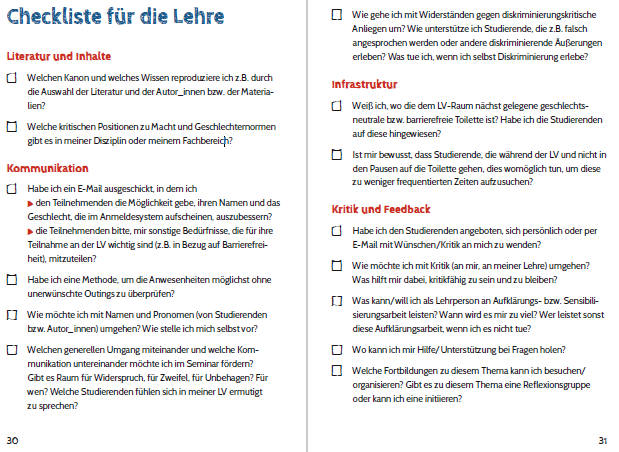
The brochure answers commonly asked questions and suggests specific courses of action for teaching. The checklist in the brochure encourages self-reflection regarding one’s own teaching:
Download the brochure: trans. inter*. non-binary. Designing teaching and learning spaces at universities in a gender-reflective way. Vienna 2019.

